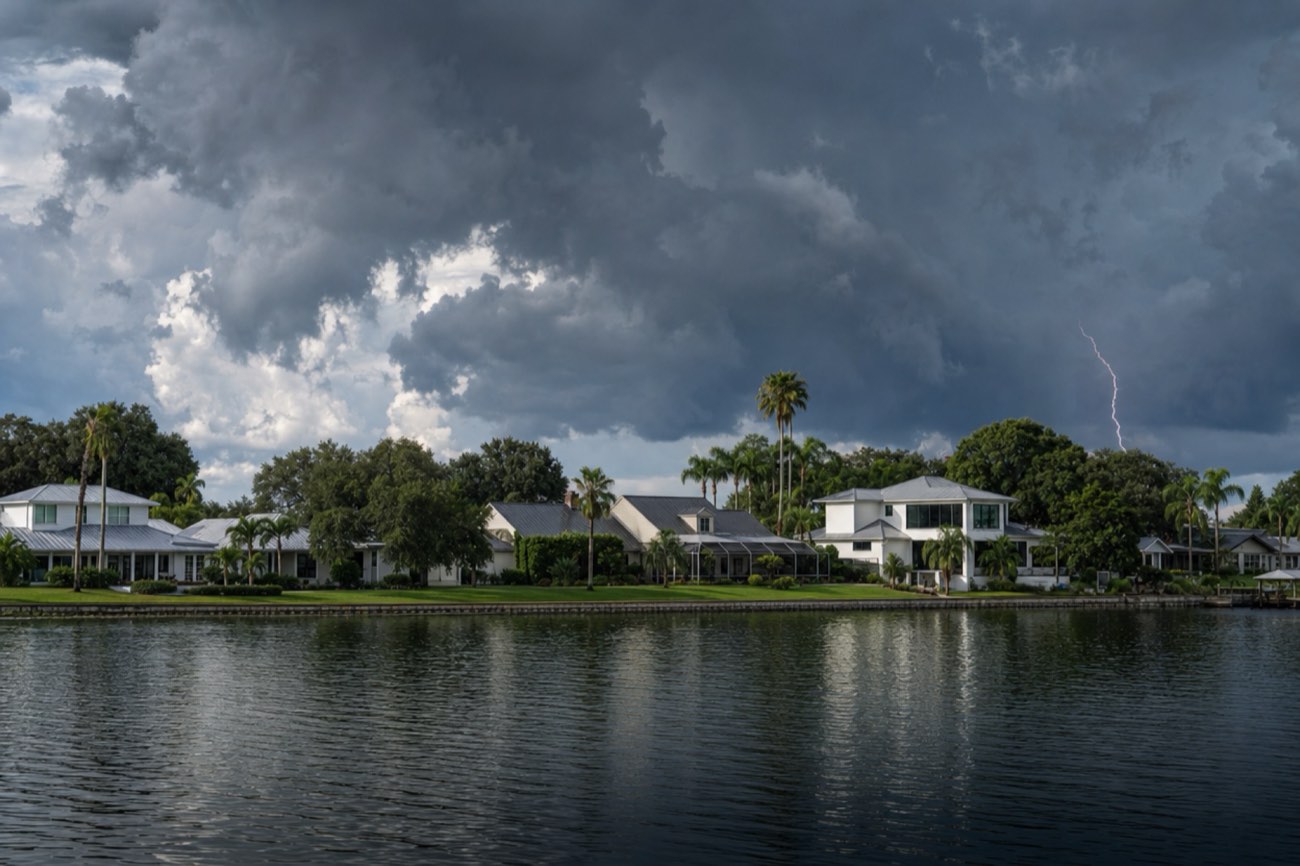
Orlando hurricanes come inland, so they usually arrive weaker than at landfall. Recent storms still brought damaging gusts and rainfall Central Florida hadn't seen in decades.
What Recent Storms Did
Charley's center passed near Kissimmee and Orlando on the night of August 13, 2004; Orlando International Airport measured a gust of 91 knots, about 105 mph, before its instrument failed. In 2022, Ian dropped 13.2 inches on the airport and up to 17.24 inches near Union Park, flooded the Little Wekiva River and Shingle Creek, and made September 2022 Orlando's wettest on record. In 2024, Milton brought an 87 mph gust to the airport and 14.83 inches of rain to west Orlando.
Lightning
The National Weather Service calls the corridor from Tampa Bay to Titusville, which runs across Central Florida, "Lightning Alley" and says it gets the most lightning in the United States, more than 90% of it from May to October.
What That Means for a New Roof
- Ask for the Florida Product Approval and the design wind speed it covers at your address.
- Ask how the eaves, rakes, ridge and hips are fastened, since that's where wind starts peeling a roof.
- Make sure the re-roof includes the secondary water barrier the code requires, which keeps water out if the outer layer is damaged.
- Hire only a state-licensed roofing contractor, and make sure a permit is pulled.
Planning a new roof before the next storm season? Read about metal roof installation in Orlando or call (689) 220-5832 for an Orlando metal roofer.
Sources: National Hurricane Center, Charley report, NWS Melbourne, Ian report, NWS Melbourne, Ian rainfall totals, Florida Climate Center, September 2022, National Hurricane Center, Ian report, NWS Melbourne, Milton report, NWS Melbourne lightning facts.